
A mokoro is a traditional dugout canoe used throughout the Okavango Delta to travel through the region’s shallow waterways and reed-lined channels. Propelled by a standing poler using a long wooden pole, mokoros glide quietly through the floodplains and lagoons of the Delta.
Today mokoros remain one of the most distinctive and traditional forms of travel in the Okavango Delta, allowing visitors to explore areas that are often inaccessible by vehicle or motorboat.
What Is a Mokoro Safari?
A mokoro safari is one of the most traditional ways to explore the waterways of the Okavango Delta. Guests travel in a dugout canoe guided by a local poler who stands at the back of the mokoro and propels the boat through the channels using a long pole.
Because mokoros move silently through narrow waterways and lagoons, they allow travellers to experience the Delta at a slower pace than motorised boats while observing wildlife, birdlife and the smaller details of the ecosystem.
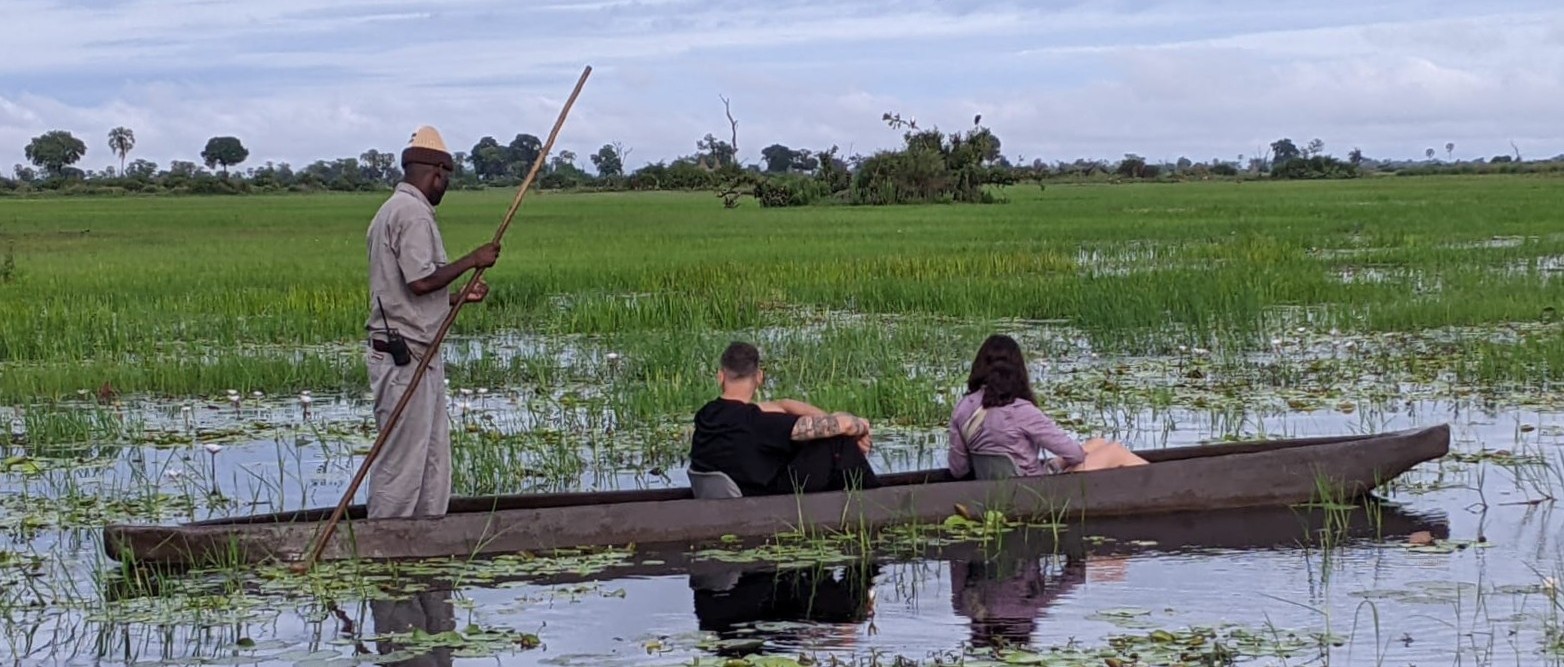
The Okavango Delta itself is one of Africa’s most unique landscapes. Instead of flowing to the sea, the Okavango River spreads across a vast inland floodplain, creating a constantly changing network of lagoons, channels and palm-covered islands.
Many areas of the Delta cannot be reached by vehicle. Narrow waterways wind between papyrus reeds and flooded grasslands, making the traditional mokoro canoe one of the most natural ways to travel through this remarkable wilderness.
For generations the mokoro was carved from the trunks of large trees and used by local communities for fishing, gathering food and travelling between the islands of the Delta. Today, in many areas fibreglass replicas are increasingly used to reduce the need for cutting large trees while still preserving this traditional way of travelling through the Delta.
Our Approach to Mokoro Safaris
Mokoro safaris in the Okavango Delta are traditionally organised through local community trusts, with polers guiding guests through the waterways and islands of the Delta.
Our approach builds on this tradition while adding an additional layer of guiding and expedition support.
On all of our mokoro trips we include a highly experienced professional guide who accompanies the safari throughout the journey. Working together with the local mokoro polers, this allows guests to gain a deeper understanding of the Delta ecosystem through guided island walks, wildlife tracking and interpretation of the landscape.
The result is a more immersive experience that combines the traditional mokoro journey with the depth of knowledge and exploration normally associated with guided walking safaris.
How Long Are Mokoro Safaris?
Mokoro safaris in the Okavango Delta can range from short day excursions to multi-day wilderness journeys.
Day trips provide an introduction to the Delta’s waterways and islands while returning to camp in the evening. Multi-day journeys travel deeper into the Delta with overnight camping on remote islands, offering a more immersive wilderness experience.
Day Mokoro Trips
For travellers wanting to experience the Okavango Delta without camping out in the wilderness, a full-day mokoro safari offers an excellent introduction to the Delta’s waterways and islands.
The day begins early at Lazy River Camp with a cooked breakfast at around 05:30. At approximately 06:30 guests depart camp on a scenic drive through the surrounding wildlife areas as the Delta comes to life in the early morning light.
The drive to the mokoro station usually takes around an hour and a half and travels deep into the Okavango Delta to the Ditshiping mokoro station, one of the furthest-in community mokoro stations operating in this part of the Delta.
The journey itself often becomes an enjoyable game drive as wildlife is frequently seen along the way.
Once at the mokoro station, the journey continues by canoe as your poler guides the mokoro quietly through the Delta’s channels.
During the morning guests explore the waterways and visit one of the Delta islands where your guide leads a game walk to interpret tracks, view wildlife and explain the surrounding landscape.
A picnic lunch is enjoyed at the water’s edge before the journey continues downstream by mokoro during the early afternoon.
Later in the afternoon guests return to the mokoro station and drive back to Lazy River Camp, usually arriving in time to enjoy sunset over the lagoon followed by dinner and a relaxed evening at camp.
For many travellers this combination of a day mokoro excursion with two overnight stays at Lazy River Camp provides one of the most enjoyable and accessible ways to experience the Okavango Delta.
What Is Included
All mokoro safaris include road transfers between Maun, Lazy River Camp and the mokoro station, accommodation at Lazy River Camp before and after the safari, and all meals during your stay at the camp and on the mokoro trips.
Accommodation at Lazy River Camp is in comfortable en-suite Meru safari tents with proper beds and private bathroom facilities.
Meals include a full cooked breakfast, picnic lunches when out on safari and relaxed dinners served in the open dining area overlooking the lagoon.
Drinks provided include drinking water, fruit juice at breakfast and wine served with dinner. Guests are welcome to bring their own additional drinks if they wish, and we are happy to provide a cooler with ice.
Multi-Day Mokoro Safaris
For travellers wanting to explore the Delta more deeply, multi-day mokoro safaris offer the opportunity to travel along waterways and camp on remote islands.
These safaris combine traditional mokoro travel with guided walks through the islands and floodplains of the Delta.
Unlike lodge safaris, these journeys focus on simplicity and immersion in the wilderness. Camps are set up on remote islands rather than designated campsites, allowing guests to experience the Okavango Delta in a truly wild setting.
We operate these safaris using lightweight expedition-style camping equipment. This keeps the group small and mobile, allowing the safari to move naturally through different parts of the Delta rather than operating from a single fixed campsite.
A Typical Day on a Multi-Day Mokoro Safari
Days on a multi-day mokoro safari begin early in the cool hours of the Delta morning. Guests usually wake before sunrise and gather around the campfire for tea or coffee with their guide as the first birds begin calling across the floodplains.
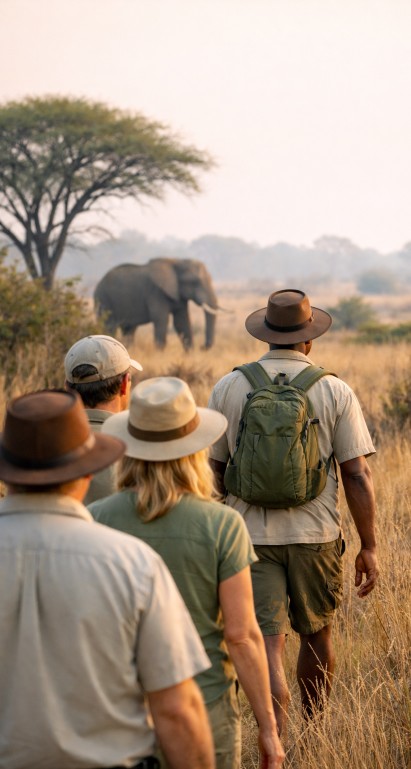
The morning is normally spent exploring the islands on foot. Accompanied by your professional walking guide and mokoro poler, guests head out on a game walk through the Delta’s palm islands and floodplains.
These walks typically last between two and four hours depending on water levels, wildlife activity and the terrain being explored.
In some cases the walk may begin with a short mokoro ride to reach one of the larger islands. This depends on water levels and hippo activity in the surrounding channels.
Your guide interprets tracks and signs along the way, explaining how wildlife moves through the Delta landscape.
Returning to camp at around 09:00, a well-earned breakfast will be waiting.
Later in the morning the safari continues by mokoro as the journey moves through the channels and floodplains of the Delta. Between roughly 10:00 and early afternoon the group travels to the next overnight campsite.
Camping takes place on carefully selected islands chosen by your guides, allowing guests to experience the Okavango Delta in a truly wild setting.
After arriving at camp and enjoying a light lunch there is time to rest during the warmest part of the day. In the late afternoon guests head out again on foot to explore the surrounding islands before returning shortly before sunset.
Evenings are spent around the campfire enjoying dinner under the stars while listening to the sounds of the Delta.
Who These Safaris Are Best Suited For
Multi-day mokoro safaris are ideal for travellers who enjoy spending time in nature and experiencing wilderness areas in a simple and authentic way.
These journeys are best suited to guests who are comfortable with lightweight camping and who enjoy being active while exploring on foot.
The pace of the safari is relaxed, but each day usually includes several hours of walking as well as time travelling by mokoro through the Delta’s channels and floodplains.
For travellers who prefer a more relaxed experience, a very good alternative is to stay at Lazy River Camp and enjoy a full-day mokoro excursion into the Delta.
Guests return in the evening to a comfortable bed, hot shower and relaxed camp atmosphere while still enjoying the natural surroundings of the Okavango Delta.
Safety and Communication
Our multi-day mokoro safaris take place in very remote wilderness areas, so safety is an important consideration.
Your guide carries a satellite phone and GPS for communication and navigation.
All guests on our multi-day mokoro trips are automatically covered by Okavango Air Rescue for emergency evacuation.
Guests joining a day trip who would like this additional cover may sign up directly on the Okavango Air Rescue website.
Starting Your Mokoro Safari at Lazy River Camp
Our mokoro safaris begin and end at Lazy River Camp, the Okavango base camp of Shangana Safaris.
Guests are collected in Maun in the afternoon, usually around 15:00, and transferred by road to camp where they spend the first night before departing into the Delta.
The stay at Lazy River includes two nights in comfortable en-suite Meru tents with dinner and breakfast provided.
The camp sits beside a lagoon often filled with hippos, and elephants are frequently seen in the surrounding area, giving guests an early taste of the Delta environment.
After returning from the mokoro journey, guests spend a second night at camp before transferring back to Maun the following morning.
This structure allows for a relaxed start and finish to the mokoro safari while providing time to enjoy the peaceful surroundings of the camp.
Guests who would like to extend their stay in Botswana may also wish to explore our Scheduled Botswana Safaris, which offer small-group departures to areas such as Moremi and Khwai.
For broader Botswana safari planning advice and information about different safari styles, you may also find our Botswana Safari Guide helpful.
Guests who would like to extend their stay in Botswana may also wish to explore our Scheduled Botswana Safaris, which offer small-group departures to areas such as Moremi and Khwai.
For broader Botswana safari planning advice and information about different safari styles, you may also find our Botswana Safari Guide helpful.
Plan Your Mokoro Safari
Whether you are looking for a full-day mokoro excursion or a multi-day wilderness journey, feel free to contact us to discuss the options and find the best fit for your Botswana safari itinerary.